


[ad_1]
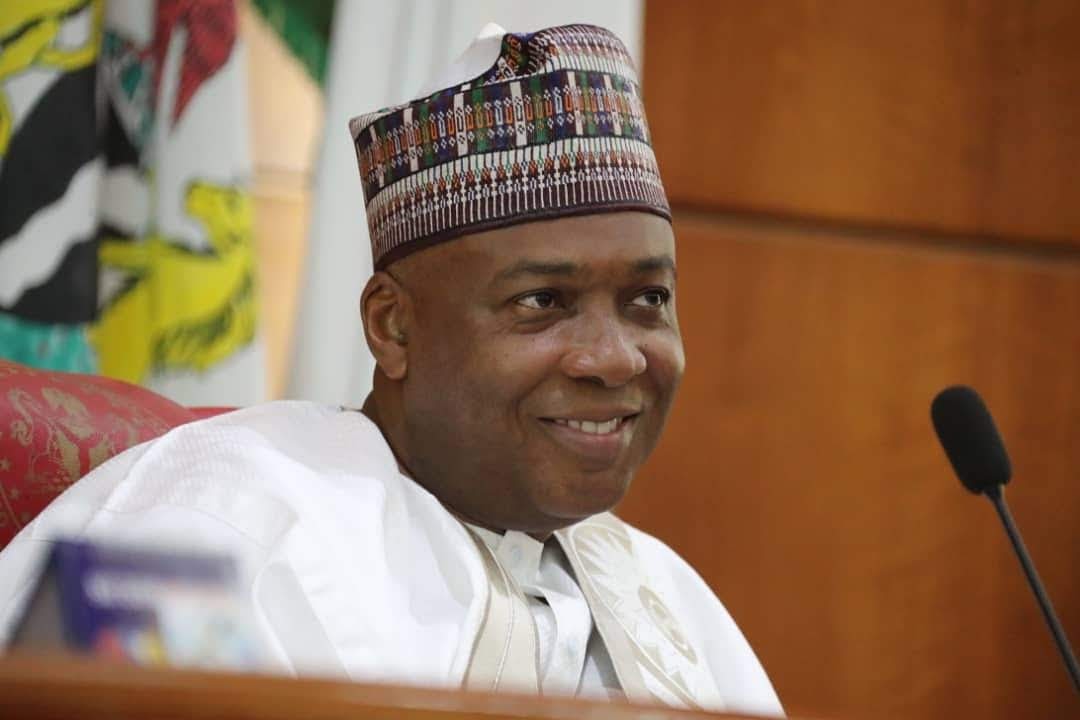
By Abubakar Bukola Saraki
(Text of the presentation at the 2026 edition of the Pastor Poju Oyemade-inspired ‘Platform Nigeria’ by the former Senate President in Lagos on June 12, 2026)
I want to begin not with an argument, but with a date. June 12. For a long time, this was a date the Nigerian state preferred to forget — deliberately left off the calendar of national memory. And yet the people would not let it die. Year after year, citizens kept faith with its meaning: the day in 1993 when Nigerians of every tongue, every faith, and every region walked to the polls and spoke with one astonishing voice. That mandate was annulled. Lives were lost defending it. A man went to prison for it and never came home. But the idea survived. And today we stand on Democracy Day, which exists only because ordinary Nigerians refused to surrender their belief in the ballot.
I open here deliberately, because everything I will say in this hall flows from a single truth: democracy in Nigeria was never handed to us. It was fought for. And what is fought for must be cherished, protected, and built upon — or it slips away. My subject is the institution I had the honour to lead between 2015 and 2019 — the National Assembly, and in particular the Senate of the Federal Republic. I want to make a case that is often drowned out by the noise of our politics: that the legislature, for all its imperfections and for all the ridicule it sometimes attracts, is the load-bearing wall of our democracy. Remove it, weaken it, hollow it out, and the whole structure comes down.
I will make this case under three headings: First, how the legislature secures democratic stability. Second, how it strengthens governance. And third, how it drives national development. Three pillars of one promise — the promise of Nigeria.
THE LEGISLATURE AS GUARANTOR OF DEMOCRATIC STABILITY
Let me start with a confession about how our democracy is often misunderstood. When Nigerians think of power, they think of one office: the President. The presidency dominates our imagination so completely that we sometimes speak as though the government is the President — as though the National Assembly is a nuisance to be managed and the courts an obstacle to be circumvented. But the framers of our constitution understood something profound: the greatest danger to a free people is not a weak government, but an unchecked government — power that answers to no one, authority that cannot be questioned. So the framers did something deliberate, even inconvenient. They split power into three and made the arms of government depend on one another. They built friction into the system, on purpose. That friction is not dysfunction. That friction is freedom.
The legislature is where that principle lives most fully. It is the arm of government closest to the people and furthest from a single will. One President — but four hundred and sixty-nine legislators in the National Assembly, one hundred and nine Senators and three hundred and sixty Representatives, each sent there not by appointment, not by patronage, but by the direct vote of a constituency. When you stand in that chamber, you do not represent yourself. You carry the hopes and the grievances of hundreds of thousands of Nigerians who will never set foot in Abuja, but whose lives are decided there.
Here is what democratic stability actually requires: that disagreement has somewhere to go. In societies without functioning legislatures, conflict has nowhere to be resolved except on the streets, in the barracks, or through the barrel of a gun. The parliament is the arena where a divided country can argue without breaking — where North and South, farmer and herder, labour and capital, Muslims and Christians can contest their differences in words and in votes rather than in violence.
But let me tell you what I learned in those four years. A legislature that cannot say “no” is not a legislature at all. A legislature which simply receives executive proposals, approves them without scrutiny, and goes home has not fulfilled its constitutional mandate. It has merely performed a ceremonial function. It is an echo. Also, a democracy made only of echoes is one election away from becoming something else entirely. The independence of the National Assembly is not rebellion against the government of the day. It is the very thing that makes a government legitimate, because a mandate that is never tested is a mandate no one can trust.
This is the deepest service the legislature renders to stability: we absorb the shocks. When citizens are angry, they have representatives to petition. When a community feels abandoned, a senator can raise its name on the floor. When a policy threatens to ignite a region, there is a chamber where it can be debated, amended, and softened before it ever becomes law. The legislature is the pressure valve of the Republic. Block it, and the pressure does not disappear — it finds another, far more dangerous, way out.
And so, on this June 12, the lesson is plain. We did not lose democracy in 1993 because the people failed. We lost it because the institutions that should have defended the people’s verdict were too weak to do so. The remedy is not less politics. It is stronger institutions — and at the centre of those institutions stands the legislature. When we speak of national stability, the conversation turns quickly to the military, the police, and the security services. Physical security matters enormously. I have been to Maiduguri; I have sat with displaced families and looked into the eyes of people who have lost everything. I know what insecurity does to a nation. But physical security alone cannot create stability. The most heavily policed societies can still be profoundly unstable — fractured by inequality, corroded by impunity, hollowed out by lost trust.
Political tension does not vanish when you suppress it; it accumulates, and when it can no longer be contained it finds expression in ways far more destructive than any parliamentary debate. A society where grievances cannot find legitimate expression in its institutions will eventually express them in its streets — and, in the worst cases, through violence and extremism. The legislature is the one institution built to let those grievances be aired and resolved before they explode.
LEGISLATURE AND THE STRENGTHENING OF GOVERNANCE
Let me turn to my second pillar: governance. If democratic stability is about whether power is checked, governance is about how well power is used — and here too the legislature’s work is constant, unglamorous, and indispensable. People imagine that lawmaking is the whole of the job. It is not even half of it. The constitution gives the National Assembly three great instruments of governance, and most Nigerians have never been told plainly what their parliament does on their behalf.
The first instrument is the power of the purse. The constitution is unambiguous: no money may be withdrawn from the public funds of the Federation except in the manner prescribed by the National Assembly, and the President must lay before us the estimates of revenue and expenditure each year. No Appropriation comes into force unless we pass it. Think about what that means. Every road, every hospital, every soldier’s salary, every kobo spent in your name must first pass through your representatives. When we examine the budget line by line, we are not performing a ritual — we are deciding what this country values and what it can afford, and defending your money from waste and from theft.
However, the executive has often found it easy to set a wrong narrative in the public space against the legislature about the process of passing the annual budget. An example is the annual claim that the legislature is “padding the budget.” Even late President Muhammadu Buhari went on TV to accuse the legislature of ‘padding the budget’. How can the legitimate maker of a document be accused of forging it? The legislature is the only body constitutionally charged with producing the budget; the executive merely proposes. If an executive will not share its priorities, the 469 members still have a duty to ensure the needs of constituents are met. It is like accusing the organisers of The Platform of forging their own programme because my preferred speaking slot did not make the final schedule.
A lot of the time, the executive wants to feel comfortable violating the constitutional provision prohibiting it from spending money without legislative approval. It may be relevant to mention the case of how in early 2018, the Buhari administration paid $496 million to purchase 12 units of A-29 Super Tucano aircraft from the US government for the purpose of combating terrorism and insurgency, without the expenditure being provided for in the budget. Though the intention and purpose were good, the action was illegal, a violation of the law. It is the same way many agencies have continued to spend money outside the budget, a gross violation of the law.
That power of the purse extends, under the Fiscal Responsibility Act, to borrowing, which the National Assembly must approve. Let me be direct about what this means. When our country borrows — from international institutions, bilateral lenders, or the bond markets — that is not government money. It is the obligation of every Nigerian alive today, and of their children, and of their children’s children, who have no voice in the decision being made. A legislature that approves borrowing without interrogating the terms, the purpose, the rate of return, and the debt-service burden is mortgaging the future of generations who cannot speak for themselves. It was the reason the 8th Senate under my leadership rejected the plan to borrow $29.96 billion by the Buhari administration in September 2016. We rejected the plan because it was not accompanied by any breakdown or explanation on how the funds would be spent or what projects it was to be used to finance. My colleagues and I believed it was a massive loan that would further plunge Nigeria into a bottomless debt pit.
The second instrument is oversight. The constitution empowers each House to investigate the conduct of any authority administering the laws we enact, and the expenditure of any department charged with carrying them out, and to summon persons and documents. I have heard oversight described as harassment of the executive. I reject that completely. Oversight is the constitutional mechanism by which the people, through their representatives, hold power to account — and without accountability there is no trust. Passing a law is the beginning, not the end; the harder question is whether it is obeyed and whether public money is doing what it was sent to do. I will say candidly that oversight is where our system is still weakest: committees can be captured, hearings can become theatre. But where it works — and it does work — it is the difference between an agency that serves the public and one that serves itself. You remember when the 8th Senate invited the then Comptroller General of Customs, Col. Ahmadu Alli (retired) to appear before it to explain the policy by the Customs to query and demand duties from vehicles and goods that are already in use within the country. He simply ignored the invitation. A flagrant violation of the law.
The third instrument is the confirmation of executive appointees. The most senior appointments in this country — ministers, justices, heads of critical agencies — do not take effect on the President’s word alone; they come before the Senate. That screening is a check on patronage, a moment to ask whether a person is fit to hold power over us. The case of the former acting chairman of the Economic and Financial Crimes Commission, Ibrahim Magu, comes to mind: the 8th Senate declined to confirm him on the strength of a security report from the DSS — another agency of the very president who had nominated him. The Constitution does not require the Senate to explain why it refuses to confirm a nominee. Just as it does not require a President to explain why he is nominating a person for an office. The discretion to confirm or not is ours, and exercising it is not lawlessness — it is the law. The discretion to nominate is also that of the President. Ignorance of that role has too often led citizens to aid the executive in undermining the legislature. In the 8th Senate, we confirmed over 97 per cent of the executive’s nominees. The one or two who failed did so on the merits and on the security reports before us, amid a serious blackmail campaign against the institution and its leadership.
The Magu case became personally costly for me. The man in question took it very personally. He refused to understand that it was a decision of the Senate and in line with our constitutional powers, As a result, he waged a war of attrition against me and subjected me to the type of inquisition, harassment, humiliation, and court trial that no Senate President before and after me has experienced. And governance, properly understood, means responsiveness. A parliament that does not listen is just an expensive building. In our four years, the 8th Senate treated and resolved more citizen petitions than any Senate in the history of this Republic — ordinary Nigerians, wronged or ignored, who finally had somewhere to bring their case.
I remember the case of Police Corporal Celestine Williams who was dismissed in 1996 without any form of trial based on the powers conferred on the police by Decree 17 of 1984. Our committee on ethics, privileges and public petition reviewed his petition and held that such a power conferred on the police by Decree 17 was inconsistent with democratic rule. His dismissal was subsequently reversed and the police reabsorbed the Corporal based on our recommendation. That is what governance feels like from the ground: not a grand theory, but a widow whose pension was restored, a community whose complaint was finally heard.
So, when you next hear someone dismiss the legislature as a place where nothing happens, particularly about what the framers of the Constitution designed it for, ask them a simple question. Who guards the treasury? Who calls power to account? Who stands between the citizen and the silence of an unaccountable state? In every functioning democracy on this earth, the answer is the same. The parliament. Your parliament. That the legislature may not be doing perfectly well today does not mean the roles created for it are not needed or vital or that the institution cannot be made to discharge those roles efficiently.
LEGISLATURE AND NATIONAL DEVELOPMENT
I come now to my third pillar, and the one I care about most deeply: development. There is a tired idea in our country that development is the work of the executive alone — that the President builds the roads and the legislature merely talks. I want to retire that idea this morning, because it is not only wrong, it is dangerous. Roads and bridges are visible. But the architecture that makes roads and bridges and factories and jobs possible is law — and law is the work of the legislature.
Consider how the legislature once saved this country from systemic collapse. When the late President Umaru Musa Yar’Adua fell gravely ill and left no letter transmitting power to his deputy as the law required, the nation became rudderless and leaderless. The National Assembly stepped in with the Doctrine of Necessity, enabling the Vice President to step into the saddle as Acting President even where the constitution made no explicit provision. That intervention calmed frayed nerves, doused tension, and set the ship of state back on course.
When the 8th Senate was inaugurated in 2015, this country was sliding into recession. Oil prices had collapsed, investment was fleeing, and we decided the legislature would not stand on the sidelines. We would legislate our way toward recovery — sitting with economists, the business community, and experts to ask one hard question: what laws are strangling enterprise, what laws are outdated and are no longer in sync with global best practices, and which new ones would set it free? This type of initiative has never been done before. Out of that came a deliberate reform agenda — the National Assembly Business Environment Roundtable, NASSBER — a partnership between the legislature, the private sector, academia, the Nigerian Bar Association, and our development partners. It led to the enactment of forty-eight laws meant to change the face of the business sector.
We passed laws to make it possible for ordinary Nigerians and small businesses to access credit — the Secured Transactions in Movable Assets law and the Credit Reporting law — so that a trader’s inventory or a farmer’s equipment could finally serve as collateral, instead of credit being locked away for the privileged few. We advanced the most significant overhaul of company law in nearly three decades, to make it easier and cheaper to start and run a business. These were not headlines, but they moved Nigeria up the global ease-of-doing-business rankings, and behind every place we climbed were real entrepreneurs who found one fewer wall in their path.
I remember an engagement with traders from Aba — shoe manufacturers, textile producers, food processors who had built real businesses against formidable odds. Their message was simple: give us a market where we can sell our goods. They also wanted the government to buy what they make. That led the 8th Senate to review the Public Procurement law with what we called “Made in Nigeria” provisions — ensuring that what can be produced or provided by Nigerians is not needlessly sourced from abroad. We tried to exemplify this aim when I personally promoted the Innoson Vehicles brand. I got one of their cars and put it in my official convoy as Senate President and sought to encourage our security agencies to patronise the company. I am happy today that the Innoson Motors brand is doing very well in the Nigerian and West African market.
We did not stop at the economy, because development is not only about money — it is about who gets to share in the future of this nation. We passed a law to end discrimination against persons with disabilities — to say, as a Republic, that a citizen in a wheelchair is no less a citizen, with a right to dignity, to access, and to a place in our common life.
We passed the Sexual Harassment in Tertiary Educational Institutions (Prohibition) Bill to protect young women and make our campuses safer. And when Monica Osagie, a Master of Business Administration student of the OAU, Ile-Ife, was subjected to harassment by her lecturer who demanded sex to raise her grade, we raised a motion in the chamber to ensure that the law which we passed a year earlier was put in action against the lecturer involved. The lecturer, Prof. Richard Akindele was eventually jailed. Again, in 2017, when the cases of people who sustained gunshot wounds but died because they were refused treatment by the hospitals became rampant, we passed the law prohibiting hospitals from refusing to treat such patients. This was why my colleagues and I felt so sad and outraged that despite the law, a youth corps member, Linda Igweatu who was accidentally shot by the police on the night of July 4th, 2018 reportedly died because she was denied treatment by a public hospital.
To demonstrate our empathy and concern as well as calm frayed nerves over the incident, I put a phone call through to the victim’s sister and commiserated with the family. I assured them that the culprit would face the wrath of the law. The Senate also adopted a motion which mandated the chairman of its committee on Senate to follow up and ensure the police give justice to the victim, her family, and the general public. The aforementioned laws were part of those we enacted in response to specific problems confronting Nigerians. And — perhaps the achievement closest to my heart — we changed the constitution itself to open the doors of leadership to the young. The “Not Too Young To Run” reform reduced the age barriers that had locked an entire generation out of the offices of this country.
In a nation where the median age is barely eighteen, we told our young people: this Republic is not a property you inherit when your elders are finished with it. It is yours now. Run for it. As a result of that our constitutional amendment, we now have Honourable members of the House of Representatives who were elected while they were in their 20s. Hon. Ibrahim Bello Mohammed representing Birnin Kebbi/Kalgo/Bunaze Federal Constituency was elected at the age of 26 and Hon. Akarachi Etinosa Amadi representing Mbatoli/Ikeduru Federal constituency was elected when he was 29.
Another area where the 8th Senate made profound intervention was in the review of the law governing the petroleum industry. For two decades, our petroleum sector ran on a legal framework built for a different era — the Petroleum Act of 1969. Several attempts were made, without success, to amend the law. The executive would not introduce a bill to fix it. So, the Senate did, working with all stakeholders to produce a modern, representative law. The Petroleum Industry Governance Bill passed the 8th Senate but never received presidential assent. In 2021, the Petroleum Industry Act was signed into law — and many of the core propositions we had developed through years of careful work resurfaced in it, substantially intact. I take instruction: serious legislative work is never wasted, even when it is temporarily blocked. Ideas that find legislative form enter the public domain, shape the conversation, and eventually find their moment. That work was not a failure — it was an investment whose return was deferred, not denied. The same was true of the electoral reforms we fought for and saw denied assent.
AN HONEST RECKONING
I would be unworthy of this platform if I stood here and pretended the legislature is without fault. It is not. And the surest way to weaken an institution is to refuse to look at it honestly. Our parliament is too often seen — and sometimes rightly seen — as distant from the people it serves. Its proceedings can feel opaque. Its members can appear more attentive to the executive who controls resources than to the constituents who control votes. Oversight can curdle into theatre. And the constant turnover of members means hard-won expertise walks out the door every four years, leaving each new chamber to relearn the same lessons.
These are real failings. But notice — every one of them is an argument for a stronger legislature, not a weaker one. The answer to a parliament too dependent on the executive is more independence, not less. The answer to opaque proceedings is more openness. The answer to a captured committee is a more empowered, better-resourced one. We do not cure the sickness of an institution by starving it. We cure it by demanding more of it — and more of ourselves as citizens.
Because here is the truth that ties it all together: a legislature is only ever as strong as the citizens who hold it to account. People who do not know what their parliament does cannot defend it when it is attacked, reward it when it is brave, or punish it when it betrays them. The single greatest reform we could make to the National Assembly would cost the government nothing — a citizenry that watches, that asks, and that votes on legislative records, not just presidential personalities.
Let me be honest about my own experience, because it goes to the heart of this. The 8th Senate was not a rubber stamp. We did not see our role as applauding whatever came from the other end of the bridge. There were moments of real tension with the executive — uncomfortable, costly, and personal. I will not pretend otherwise.
I remember vividly August 7, 2018, when the National Assembly Complex was invaded by hooded, heavily armed security agents enforcing an unlawful order to remove me as Senate President. My offence? The executive believed my leadership of the 8th Senate was not sufficiently submissive, and that my emergence was against the wishes of the establishment. The sanctity of the legislature was violated by agents of the executive, and democracy was placed under extreme strain — for the simple reason that some refused to accept that the legislature is an independent arm of government, not an appendage of the executive.
RECOMMENDATIONS ON THE WAY FORWARD
After these submissions, let me propose that we all take cognisance of the following:
(a) The electorate has a role to play in making the legislature a bastion for development, stability, and national security. Democracy cannot flourish where people do not understand how the constitution works — and that they too have a duty to defend the sanctity of the law-making institution.
(b) The electorate must consciously elect the most capable and dedicated people to the legislature. Too often a member who sponsors not a single bill in four years is returned again and again, while vibrant, hardworking legislators are voted out.
(c) Our legislators lack the research and data capacity to perform at their best. I recall, in the 7th Senate, sponsoring a motion on corruption in the fuel-subsidy regime: I had to engage researchers at home and abroad — some going as far as Liverpool — to obtain shipping records on the movement of supposed fuel cargoes. The records existed, but extracting and analysing them required resources few legislators command. That capacity gap is something we must urgently address.
(d) We must address the issue of electoral reform. This should never wait till the eve of an election before it is put in place. Without a credible law that curbs rigging and manipulation and encourages good leadership, the men and women who reach the legislature will not always represent our first eleven.
(e) We must end vote-buying. A good candidate cannot always match the money required to buy votes or party tickets, and a legislature chosen that way cannot be our best. Getting the finest into the legislature demands deliberate, conscious effort.
(f) We must also examine ourselves. A citizenry that disregards the law in its private dealings cannot expect to produce a law-respecting legislature. We have too often made law-breaking a habit — and with that mindset, little else can go right.
Distinguished ladies and gentlemen. Let me bring us back to where we began — to June 12. We are here today, as free citizens of a democratic Republic, because a generation before us decided that their voice, expressed through a vote, was worth defending against the full weight of an unaccountable state. They did not have strong institutions to protect their mandate. That mandate was stolen precisely because the structures that should have stood firm were too fragile to bear the weight. Perhaps it is pertinent to raise this question: If there is a repeat of the annulment of an election, what do we think will happen? Are we as citizens ready to resist such an undemocratic action? Are our institutions – executive, legislature, courts, and electoral body strong enough to frustrate such undemocratic action? This is a question that we need to devote a great day like June 12 to settle.
Our task — the task of this generation, the task of everyone in this hall — is to make sure that can never happen again. Not with slogans, and not with anger alone, but by building institutions strong enough to outlast any strongman, and by insisting that the legislature — your legislature — be independent, transparent, capable, and close to the people.
To my fellow public servants: let us retire the lie that strong legislatures and strong nations are enemies. They are the same thing. There has never been a stable, prosperous, free country anywhere on this earth built on a weak parliament. Not one. Let me reiterate my position that the only difference between a democratic rule and military rule is the presence of a parliament. And this applies to governments across the world. This is another clear indication of how important a legislature is as an institution of governance.
And to every Nigerian: democracy is not a building in Abuja. It is not a single election, or a single office, or a single person. It is a living thing that must be tended every single day — by the laws we pass, by the power we check, by the development we build, and above all by the vigilance we never lay down.
The legislature did not make this democracy alone. The people did, in 1993, with their feet and their faith. But it is the legislature — strong, independent, and answerable to you — that will keep it standing long after all of us have left the stage. That is the promise of Nigeria. It is worth our work. It is worth our courage. And it is, as June 12 reminds us every year, more than worth our defence.
In conclusion: a strong legislature promotes transparency. A transparent government inspires public trust. Public trust strengthens democratic legitimacy. And democratic legitimacy produces stability.
Thank you. God bless you, and God bless the Federal Republic of Nigeria.
[ad_2]
Source link










Leave a comment