


[ad_1]

As global health authorities intensify surveillance over the spread of Hantavirus, concerns are beginning to grow over Nigeria’s vulnerability to the rodent-borne disease amid poor sanitation, overcrowded communities, weak public awareness and health gaps.
Although no confirmed case has been officially recorded in the country, the presence of rodents in homes, markets, and food storage areas could increase the risk of exposure if preventive measures are neglected.
The development has also renewed conversations around Nigeria’s preparedness to detect and respond to emerging infectious diseases before they escalate into a public health emergency, especially as recent global conversations about Hantavirus have raised anxieties among Nigerians already battling recurring disease outbreaks, poor sanitation, and worsening living conditions.
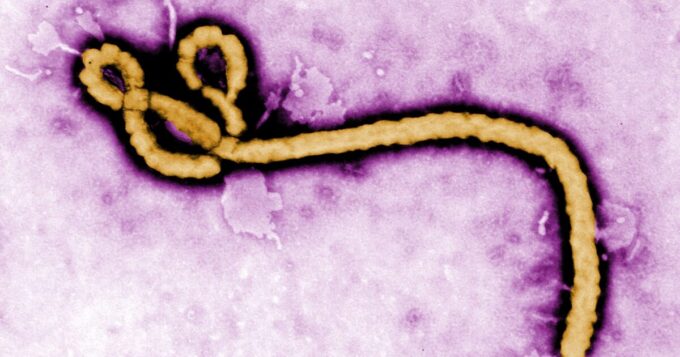
Hantaviruses are zoonotic viruses that naturally infect rodents such as rats and mice and are occasionally transmitted to humans.
Infection in people can result in severe illness and often death, although the diseases vary by type of virus and geographical location.
The viruses belong to the family Hantaviridae within the order Bunyavirales. Each Hantavirus is often associated with a specific rodent reservoir species in which the virus causes long-term infection without apparent illness. Although many Hantavirus species have been identified worldwide, only a limited number are known to cause human disease.
Hantaviruses do not have the ability to reproduce on their own but invade living cells to replicate, relying entirely on the host’s cellular machinery to produce new virus particles.
The virus was first detected during the Korean War after thousands of United Nations soldiers fighting in Korea developed a mysterious illness involving high fever, bleeding, and kidney failure. Scientists later traced it to rodents near the Hantan River, from which the name “Hantavirus” was derived.
In the United States, the infection is known to result in Hantavirus cardiopulmonary syndrome, a rapidly progressive condition affecting the lungs and heart, while in Europe and Asia, the viruses are known to cause haemorrhagic fever with renal syndrome, which primarily affects the kidneys and blood vessels.
Meanwhile, the World Health Organisation said transmission of Hantaviruses to humans could occur through contact with contaminated urine, droppings, or saliva of infected rodents.
Although infection through rodent bites is uncommon, activities involving contact with rodents, such as cleaning enclosed or poorly ventilated spaces, farming, forestry work, and sleeping in rodent-infested places, increase the risk of infection.
On May 2, 2026, the WHO received a report of a cluster of passengers with severe respiratory illness aboard the cruise ship, MV Hondius, which had 147 passengers and crew members.
As of May 8, eight cases, including three deaths, had been reported, with six cases confirmed as Hantavirus infection.
On May 14, the Director-General of the WHO, Tedros Adhanom Ghebreyesus, disclosed that more than 120 passengers from 23 countries safely disembarked from the vessel in Tenerife and were being monitored by public health authorities in their home countries after weeks of quarantine and containment efforts.
Tedros said three deaths were linked to the outbreak and stressed that the operation highlighted the importance of preparedness, surveillance, and international cooperation in responding to infectious disease threats.
The United States Centres for Disease Control and Prevention highlighted the two syndromes caused by the disease.
According to the CDC, Hantaviruses found in the Western Hemisphere, including the United States, can cause Hantavirus pulmonary syndrome, which is commonly spread by the deer mouse.
Haemorrhagic fever with renal syndrome is a group of clinically similar illnesses caused by Hantaviruses found mostly in Europe and Asia. However, the Seoul virus, a type of Hantavirus that causes HFRS, is found worldwide, including in the United States.
There are several different Hantaviruses, each with specific rodent carriers, and they cause two basic groups of disease.
The first group is haemorrhagic fever with renal syndrome. These illnesses typically develop within one to two weeks of exposure and sometimes later. Symptoms include acute fever, severe headache, blurred vision, and nausea.
Severe forms, such as those involving the Dobrava virus or Hantaan virus, can result in internal bleeding and kidney failure.
One of the first HFRS illnesses to be characterised was Korean haemorrhagic fever, also called haemorrhagic nephroso-nephritis, which was recognised during the Korean War of 1950 to 1953. Korean haemorrhagic fever is fatal in five to 15 per cent of cases.
It is caused by the Hantaan virus and carried by a type of wood mouse known as the striped field mouse, scientifically called Apodemus agrarius. This type of mouse is prevalent in Asia and Eastern Europe.
Symptoms of HPS usually begin to show between one and eight weeks after contact with an infected rodent. Early symptoms may include fatigue, fever, and muscle aches, especially in the large muscle groups like the thighs, hips, back, and sometimes shoulders. Some patients also experience headache, dizziness, chills, and abdominal problems such as nausea, vomiting, diarrhoea, and pain.
HPS can be deadly, with about 38 per cent of people who develop respiratory symptoms dying from the disease.
The CDC noted that four to 10 days after the initial phase of illness, the late symptoms of HPS appear. These symptoms include coughing and shortness of breath, while patients may experience tightness in the chest as the lungs fill with fluid.
In a May 2026 report, the WHO noted that there is no licensed specific antiviral treatment or vaccine for Hantavirus infection, although care is supportive and focuses on close clinical monitoring and management of respiratory, cardiac, and kidney complications.
It emphasised that early access to intensive care when clinically indicated improves outcomes, especially for patients with Hantavirus cardiopulmonary syndrome.
These infections are relatively uncommon globally but are associated with a case fatality rate ranging from less than one per cent to 15 per cent in Asia and Europe, and up to 50 per cent in the Americas. Globally, it is estimated that between 10,000 and over 100,000 infections occur each year, with the largest burden in Asia and Europe.
For instance, in China and the Republic of Korea, HFRS continues to account for many thousands of cases annually, although incidence has declined in recent decades.
In Europe, several thousand cases are reported each year, mainly from northern and central regions where the Puumala virus circulates.
The WHO further explained that in the Americas, HCPS is much rarer, with hundreds of cases reported each year across the continent. The United States has reported fewer than 1,000 cases, while South American countries such as Argentina, Brazil, Chile, and Paraguay report small numbers of cases annually.
Despite the lower incidence, HCPS has a high case fatality rate, commonly between 20 and 40 per cent, making it a major public health concern.
In many Nigerian cities where rats have become a constant problem in homes, markets, and drainage systems, fear surrounding the virus reflects deeper concerns about the country’s fragile public health and sanitation systems.
Recently, the Nigeria Centre for Disease Control and Prevention intensified disease surveillance across the country following reports of an international Hantavirus cluster linked to the cruise ship, which had travelled to multiple countries at the time.
In a public health advisory, the Director-General of the agency, Dr Jide Idris, said there was no confirmed case of Hantavirus in Nigeria.
He said the advisory became necessary following growing global concern over the outbreak and the need for countries to remain vigilant against emerging infectious diseases.
Idris urged Nigerians to remain calm while observing preventive measures. He advised people to reduce contact with rodents.
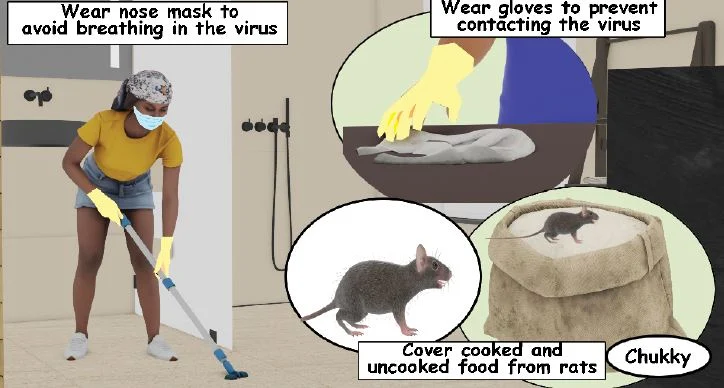
According to him, residents should maintain clean surroundings, prevent rodent infestation, properly store food items, dispose of waste safely, avoid contact with rodents and their droppings, and maintain proper hand hygiene.
Speaking on the matter, a consultant public health physician at the University of Ilorin Teaching Hospital, Kwara State, Prof Tanimola Akande, stressed the need for vigilance and improved environmental sanitation to reduce the risk of possible outbreaks in the country.
He said Nigerians should maintain proper environmental hygiene and prevent rodents from breeding around homes, offices, and public spaces.
The public health expert also recommended sealing entry points into buildings, ensuring proper disposal of domestic waste, and keeping food items in properly covered containers to limit contact between rodents and humans.
He said, “Hantavirus is a zoonotic infection transmitted through rodents’ urine, saliva, and droppings. Human-to-human transmission is uncommon. There are no reported cases in Nigeria as of now.
“Preventive measures include good environmental hygiene that prevents the breeding of rodents around houses, workplaces, and other areas where humans may come into contact with rodents or their excreta. Rodents should be controlled through sealing entry points into homes, proper disposal of domestic waste, and adequate covering of food containers.”
Similarly, veterinary doctor, Dr Idris Bayonle, warned that flooding, climate change, and poor waste management continue to increase contact between humans and disease-carrying animals, while cautioning against panic and misinformation.
Bayonle, who urged the National Orientation Agency to embark on massive public health sensitisation on the disease, noted that awareness should be guided by science rather than fear circulating online.
“The environmental conditions that support rodent-borne diseases already exist in many communities, and people must pay attention to hygiene, food storage, and rodent control. Flooding, climate change, poor environmental sanitation, and weak waste management systems continue to increase interaction between humans and disease-carrying animals, especially rodents.
“While there is no need for panic, Nigerians must avoid misinformation and rely on verified scientific information. Public awareness is also very important at this stage, and agencies like the National Orientation Agency should intensify awareness campaigns on preventive measures and environmental hygiene,” Bayonle said.
[ad_2]
Source link















Leave a comment