



[ad_1]
In a meeting I attended recently in Washington D.C., a group of economists reflected on their careers. The pain they all echoed was the same: how data can go wrong. In Nigeria, the data is wrong. It is wrong about nearly everything. But it is mostly wrong about unemployment and underemployment—the systemic underutilization of education, skills, and experience.
Nigeria’s unemployment data is like a cracked mirror. It reflects the general shape of the economy but distorts the true image beyond recognition. The data represents a stark contrast between official statistics and the lived reality of millions of citizens. The one-hour International Labour Organization benchmark, where anyone who worked for at least one hour within the last seven days is classified as employed, has produced an unemployment figure that often masks severe underemployment, informal survivalism and systemic poverty. It is Nigeria’s enduring contradiction: low unemployment on paper, deepening poverty in practice.
This contradiction sits at the heart of Nigeria’s democratic journey since May 1999. When former President Olusegun Obasanjo assumed office after years of military rule, Nigeria was a country with immense promise. Oil prices would soon rise. Debt relief negotiations were underway. Democratic optimism was high. There was a genuine expectation that civilian governance would unlock economic prosperity and improve the quality of life for ordinary Nigerians.
Twenty-seven years later, the picture is far more complicated.
Nigeria today is Africa’s largest economy by size and one of its poorest societies by lived experience. The country has produced billionaires, unicorn startups and impressive GDP figures at different points, yet millions of citizens increasingly struggle with food inflation, collapsing purchasing power, poor healthcare, insecurity and unstable electricity. The disconnect between macroeconomic policy and household reality has become one of the defining failures of Nigeria’s democratic era.
The current president Bola Tinubu administration inherited a fragile economy burdened by debt, subsidy distortions, low productivity and dwindling state capacity. To its credit, the government moved quickly on reforms previous administrations avoided. Fuel subsidy removal and exchange rate unification were economically rational decisions long recommended by multilateral institutions. Few serious economists dispute that Nigeria could not sustainably continue spending trillions subsidising petrol consumption while revenue remained dangerously low.
But policy logic alone does not feed citizens.
These reforms exposed millions of Nigerians to economic shock without an adequate social protection cushion. Transport costs exploded. Food prices accelerated. Small businesses collapsed under inflationary pressure. Salaries remained stagnant while the naira lost much of its value. Economic reform, without visible social relief, began to resemble punishment rather than transition.
This is where Nigeria’s fiscal dilemma becomes more troubling. Government after government has borrowed heavily in the name of development, yet citizens rarely experience the developmental outcomes associated with such debt accumulation. Roads remain poor. Public hospitals deteriorate. Universities suffer repeated strikes. Power generation stagnates. Water infrastructure is weak. In effect, Nigeria has accumulated debt without building enough productive capacity to justify it.
The World Bank’s International Development Association, the concessional lending arm designed for poorer countries, offers perhaps the most revealing indicator of Nigeria’s stalled development story. Countries that once shared similar developmental conditions with Nigeria have successfully graduated from IDA borrowing status. According to World Bank historical data, South Korea graduated decades ago. China graduated in 1999. India graduated in 2014. Vietnam exited in 2017. Turkey and Thailand also moved on. Nigeria, however, remains an IDA “blend” borrower, still dependent on concessional lending because of weak per capita income and structural economic vulnerabilities.
The comparison with Vietnam is particularly painful.
In 1999, both Nigeria and Vietnam were emerging economies with large populations, rural poverty and developmental constraints. Yet Vietnam pursued aggressive export-oriented industrialisation, invested heavily in education and manufacturing, and integrated itself strategically into global supply chains. Today, Vietnam is a manufacturing powerhouse attracting major global technology firms while exporting electronics, textiles and industrial goods at scale. Nigeria, by contrast, still depends overwhelmingly on crude oil exports and imports refined petroleum products despite being an oil-producing nation.
Indonesia offers another instructive comparison. Like Nigeria, Indonesia experienced political transition and economic instability in the late 1990s. It faced corruption challenges, subsidy pressures and currency crises. Yet successive Indonesian governments gradually diversified the economy, strengthened manufacturing, improved agricultural productivity and invested in decentralised infrastructure development. Indonesia re-graduated from IDA in 2008 after temporarily re-entering during the Asian financial crisis.
Nigeria, meanwhile, remains trapped in a cycle where each administration inherits fiscal instability, borrows to stabilise consumption, and leaves behind even greater structural fragility.
Part of the problem lies in how Nigeria understands economic growth. For too long, policymakers equated growth with oil revenue expansion rather than productivity expansion. GDP growth that does not generate mass employment, industrial capacity or household prosperity eventually becomes politically and socially meaningless. Nigeria’s economy has often grown statistically while citizens became poorer materially.
Another major issue is the state’s extraordinarily weak revenue base. Nigeria’s tax-to-GDP ratio remains among the lowest globally. Successive governments relied excessively on oil rents instead of building an efficient taxation system tied to productive economic activity. When oil prices decline, fiscal crisis follows almost automatically. Borrowing then becomes the substitute for structural reform.
Yet the answer cannot simply be endless austerity.
Nigeria’s greatest danger today is not merely debt accumulation. It is the erosion of social trust. Citizens increasingly feel disconnected from the promises of democracy because economic hardship appears permanent regardless of who governs. When people lose faith that legitimate economic effort can improve their lives, social instability becomes inevitable.
President Bola Tinubu still has an opportunity to alter this trajectory, but only if fiscal reform becomes visibly connected to citizen welfare.
First, the government must aggressively invest in food production and agricultural logistics rather than relying primarily on import interventions. Food inflation is now one of the greatest threats to household survival. Rural insecurity, poor storage infrastructure and transport inefficiency continue to destroy agricultural productivity. Nigeria does not merely need farming rhetoric; it needs agro-industrial zones linked to rail, storage and processing infrastructure.
Second, the Electricity Act of 2023, signed by President Bola Tinubu, represents perhaps the most consequential power-sector reform since the 2005 unbundling of the state monopoly. Unlike previous frameworks that concentrated regulatory authority largely at the federal level, the new law allows states to establish and regulate their own electricity markets, issue licences and attract subnational investment into generation and distribution.
This creates a significant opportunity for industrial states such as Lagos, Ogun, Rivers and Kaduna to develop embedded power systems tailored to local economic activity.
However, legislation alone will not solve Nigeria’s electricity crisis. Investors still face weak grid infrastructure, foreign exchange instability, collection losses and uncertainty around cost-reflective tariffs. In other words, Nigeria’s challenge is no longer whether private capital should participate in power generation; it is whether the state can build a credible regulatory and financial environment where investment can actually succeed.
Indonesia and Vietnam’s electricity reforms succeeded not merely because private investors were invited into the sector, but because the government simultaneously expanded transmission infrastructure, improved collection systems and maintained long-term industrial policy coordination. Vietnam combined state coordination with targeted market liberalisation, ensuring electricity expansion aligned directly with manufacturing growth. Nigeria, by contrast, liberalised parts of the sector without sufficiently resolving the infrastructure and governance constraints needed for markets to function efficiently.
Third, the government must redirect borrowing toward measurable productive sectors instead of recurrent fiscal survival. Debt itself is not inherently dangerous if tied to industrial capacity, transport infrastructure, export competitiveness and human capital development. China borrowed. India borrowed. Vietnam borrowed. The difference is that their borrowing expanded production. Nigeria’s borrowing too often finances consumption and inefficiency.
Fourth, targeted social welfare is no longer optional. Conditional cash transfers, public transportation subsidies for low-income workers, school feeding programmes and primary healthcare investments are not acts of charity. They are instruments of social stability. Economic reform without social protection eventually becomes politically unsustainable.
Finally, governance credibility matters. Nigerians can endure hardship when sacrifice appears equitable and purposeful. What fuels public anger is not merely suffering but the perception that political elites remain insulated from it. Fiscal discipline cannot apply only to citizens while government waste continues unchecked.
Nigeria’s democratic story since 1999 is therefore not simply about debt accumulation. It is about the repeated failure to convert national wealth into national wellbeing. The tragedy is not that Nigeria borrowed. Many successful economies borrowed. The tragedy is that after decades of oil wealth, debt relief, rising revenues and democratic continuity, millions of Nigerians still experience life as a daily economic emergency. And because we use flawed metrics to measure “growth” and “employment,” we borrow money based on a distorted macroeconomic picture.
More debt alone does not produce development. When disconnected from productivity, accountability and social investment, it merely produces a harsher version of poverty.
And for many Nigerians today, poverty is no longer an abstract economic term. It is hunger. It is insecurity. It is declining life expectancy. It is the quiet death of hope.
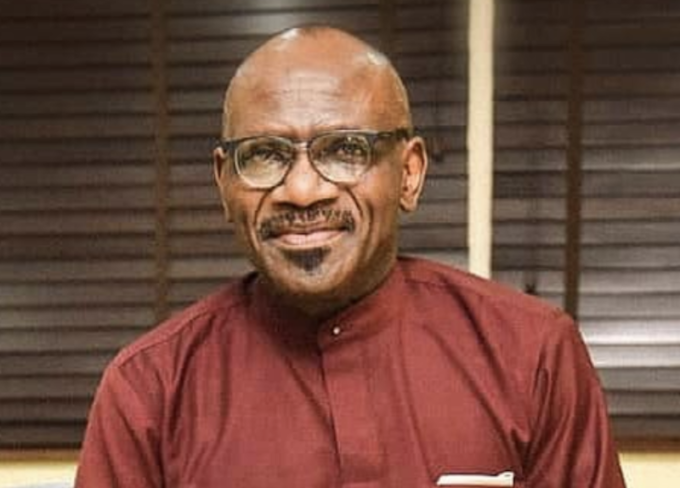
Adeola Akinremi, a public policy strategist and risk intelligence analyst specializing in emerging market regulation, is the founder and Chief Executive Officer of Hintells, a cross-corridor, AI-powered intelligence infrastructure for businesses and African diplomatic missions in Washington, D.C. He can be reached via email: adeola@hintells.com
[ad_2]
Source link











Leave a comment