


[ad_1]
Bola A. Akinterinwa
Pax Africana, is an advocacy doctrine made in Professor Ali Mazrui’s book, Towards a Pax Africana, in 1967. The advocacy doctrine asked all African leaders to be responsible for and take ownership of peace, security, and development in Africa. It asked African leaders to seek African solutions to African problems without undue recourse to external help. More importantly, African leaders were required to mobilise their native resources for self-governance and development. Responsively, Pax Africana was institutionalised by the African Union in various forms: establishment of an African Union Peace and Security Council, African Standby Force, etc. Most unfortunately, however, neither the Pax Africana nor Pax Nigeriana has achieved the objective of the doctrine as espoused by Professor Mazrui for one reason not far-fetched: Africa’s regional military operations remain largely dependent on foreign logistics and international funding.
In the same vein, Pax Nigeriana is a Nigerian ambition to be a benevolent ‘Big Brother’ in the conduct and management of intra-African relations. As a benevolent big brother, Nigeria wants to provide leadership in the quest for regional stability and conflict resolution. In this regard, being the most populous and the biggest arable land in Africa, Nigeria at times behaves as the West African regional hegemon, championing the anti-apartheid struggle in the 1960-1980s, engaging in conflict resolutions, especially in the ECOWAS Ceasefire Monitoring Group (ECOMOG), in the 1990s.
Again, like Pax Africana, Pax Nigeriana has not been achievable in the past two decades as a result of internal security challenges: boko haramism, herders-farmers conflict, armed banditry, kidnapping, self-determination struggle, political chicanery, institutional corruption, etc. While these problems are much threatening in the whole of Africa, a new international collaborative partnership has been proposed by France and it has the potential to divide the whole of Africa, making Pax Nigeriana and Africana more a myth.
Pax Nigeriana and Pax Africana
Nigeria is currently playing host to a politico-economic cold war, which is well known but which is also quietly acquiesced to. The issue of national unity is one major problem that is played politics with. Under the late President Muhammadu Buhari, the strong belief was that Nigeria is indivisible and indissoluble simply because the 1999 Constitution as amended provides for indivisibility and indissolubility of Nigeria. The belief is most unfortunate because it does not learn any lesson from international history. First, national unity cannot be maintained by manu militari.
In Nigeria, unity is maintained by force. The mentality of unity by force dates back to the time of Nigeria’s civil war that lasted from July 1967 to January 1970, when the war slogan was ‘to keep Nigeria One is a task that must be done.’ In order to keep Nigeria united, war was not only fought, the regional system put in place was also set aside and replaced with a state system. Even though the national objective was to unite, the adopted approach involved continual division of existing States. The different ethnic groups were always clamouring for self-identity.
Without any jot of doubt, the battles ended on 12 January 1970 with the unconditional surrender of Biafran General Phillip Effiong but the war is yet to come to an end. Biafra lost the battles but not the war as agitations for an independent, sovereign State of Biafra are still waxing stronger than ever before. Proponents of Biafran Republic are not alone in this matter of self-determination struggle. The Yoruba people are similarly agitating for an Oduduwa Republic. Unlike the Biafrans who use force, the Yoruba have generally adopted a non-confrontational method, but the objective of possible separation is not at all put in the cooler. In fact, there are many organisations, like the Yoruba Self-determination Movement (YSM) and the Ilana Omo Oodua which have been campaigning internationally for a separate Oduduwa Republic. And true enough, the Yoruba World Congress (YWC), led by Professor Banji Akintoye, has joined the Unrepresented Nation and Peoples Organisation (UNPO), based in The Hague. The UNPO is an international body for unrepresented peoples of the world.
With the struggle for separation, to what extent and for how long can national unity be maintained by use of force? The state system has fostered more of irredentism, anti-Nigerianism, and abuse of rule of law in the political governance of Nigeria. President Bola Ahmed Tinubu (PBAT) is making strenuous efforts to remove the visible centrifugal and centripetal irritants to national unity. In the current thinking of the 44th Olubadan of Ibadan, Oba Rashidi Adewolu Ladoja, the election of a northern president in 2027 before the complete reorganisation of Nigeria by PBAT, cannot but bring the Yoruba land under siege. As the Olubadan reportedly put it, ‘if we let Yorubaland indulge more odales (traitors) like Aregbesola and they eventually help bring back another feudal overlord in ADC to Aso Rock before total reorganisation of the system is completed in Nigeria, Yorubaland will be back under siege.’
And perhaps more disturbingly, in the eyes of the Olubadan, ‘Futa Jalon will assert its revenge in Yorubaland for the daring policies of Tinubu that frustrated their tax exploitation, Aboki exchange, fuel subsidy and regionalism. We will be back to the age of terror under Buhari… It will be a full revenge mission… Sons of Zik will give them all the support they need… the military will once again be restricted from fully going after bandits… We don’t want our destiny decided in Abuja, we want home-grown local leaders with power to shape the country’s future. When power becomes local, we know how to hold our leaders accountable like our fathers did in the First Republic.’
The implications of the view of the Olubadan are very critical. His viewpoint was made in the context of electoral politics. The Olubadan wanted ‘Aregbesola’, who he considered as a traitor, not to hobnob with a feudal overlord in the ADC. The feudal overlord he probably had in mind is former Vice President, Alhaji Abubakar Atiku. Why? Deductively speaking, Alhaji Atiku Abubakar as President has the potential to serve as a northerner, and by so doing, cannot but seek to strengthen northern hegemony in Nigeria, rather than lessening political inequality. The Olubadan foresees the renewal of internecine wars which should be forestalled by allowing PBAT to complete the reorganisation of Nigeria. Good or bad as the viewpoint of the Olubadan may be, there is no peace in Nigeria, as people live under great fear: fear of insecurity of the stomach, fear of armed banditry and boko haramism, fear of institutional corruption and injustice, fear of disintegration of Nigeria, fear of living in Nigeria, etc.
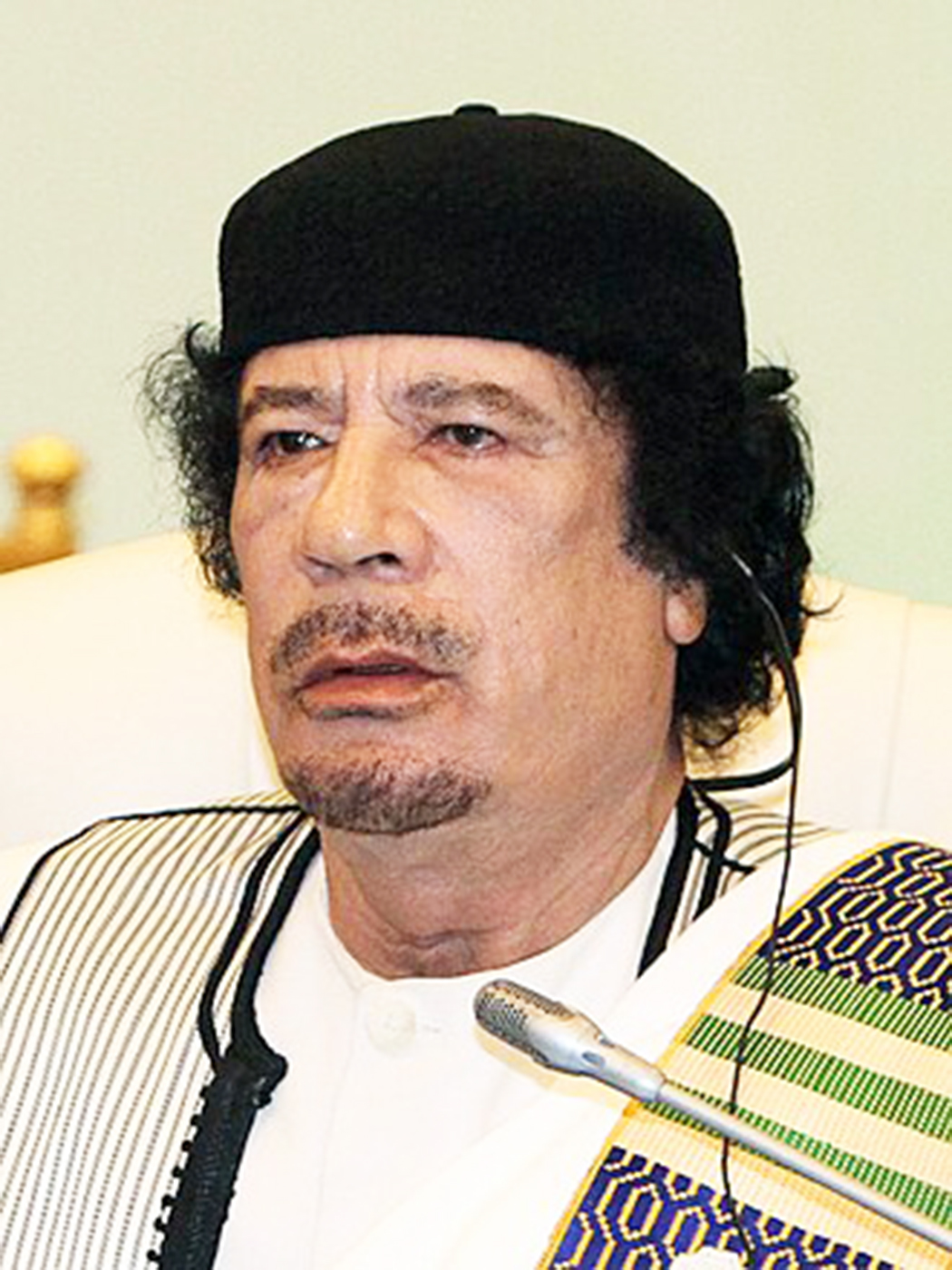
Most frightening is the prescription of the late Libyan leader, Muammar Gaddafi and Nigeria’s reaction to it. In 2010, and probably because of the sectarian violence between Muslim and Christian groups, particularly in the Jos area of Plateau State, and probably because of Gaddafi’s plan to have a politically and economically United States of Africa that would be free from Euro-American colonial influence and domination, Colonel Muammar Gaddafi suggested the partitioning of Nigeria into smaller, independent states along ethnic and religious lines (Reuters March 29, 2010, and BBC News, http://news.bbc.co.uk). He considered that the multi-ethnic nation system was not sustainable as it was in Nigeria then. He proposed splitting Nigeria into Muslim North and Christian South as it was done in 1947 in India (India and Pakistan). He also proposed the Yugoslav Model according to which Nigeria should simply break up along ethnic lines in the mania of Yugoslavia.
The Government of Nigeria was hostile to this type of suggestion. Nigeria’s ambassador in Libya was recalled from Libya. The Senate in Nigeria rejected the idea partitioning. What is noteworthy is that, considering that the religious and ethnic diversity in Nigeria was too deeply divided to co-exist within one nation, Gaddafi predicted that Nigeria would not have peace until Nigeria is divided into Muslim North and Christian South. Keeping Nigeria united by force would cause ‘war followed by more war and instability,’ in Gaddafi’s words. And true, Nigeria has not known peace since 2010, and there is nothing to suggest the likelihood of peace with the politics of insincerity that has come to characterise the fight against boko haramism in Nigeria.
On the one hand, how do we reconcile Gaddafi’s suggestion of a divided Nigeria with his quest for a United States of Africa with a common passport, a gold-backed African currency (gold dinar) to replace the CFA franc and the US dollar, a single government in which he would be the President, Nigeria would provide the Defence Minister, etc. How can a partitioned, and therefore a weaker Nigeria, be able to serve Gaddafi’s quest for an African Investment Bank to be located in Sirte (natal town of Gaddafi in Libya), an African Monetary Fund, an African Central Bank, and a unified African army?
Has Gaddafi, who declared himself a ‘Soldier of Africa’ on March 2, 2007 and who also said that the whole of Africa should be united under a single government, been proved wrong with the present situation of insecurity in Africa, and particularly in light of the crisis of xenophobia in South Africa? How do we explain the fact that 40% of the world’s armed conflicts are happening in Africa? Sudan is playing host to the world’s largest displacement crisis. The Democratic Republic of Congo is not only coping with intense fighting with rebels, but is now additionally being challenged by the resurgence of ebola virus. The Eritrea-Ethiopia is still there. Somalia’s decades of civil war are yet to abate. These problems are different from the crisis of hunger with which more than 55 million people are confronted. To these challenges is now added the challenge of the France-Africa forward Summit held in Kenya.
Issues in France-Africa Summit Partnership
The new format of the Franco-African Summit, that is, the France-Africa Forward Summit that took place on May 11 and 12, 2026 in Nairobi, Kenya has thrown up many challenges, and particularly the determination of Africa’s future in the area of continental unity and regional integration. There is the first question of what future for Africa by ignoring old wives to court new concubines? It is true that Niger, Burkina Faso, and Mali, as old wives divorced France as a husband, and the husband accepted only to look for new wives, especially Kenya as the head of the new wives (Anglophone countries).
Is it not a future of mistrust in Africa? France was declared unwanted by the countries of Alliance of Sahel States for reasons of discontinuation of neo-colonial exploitation of their countries. France reacted by seeking a new understanding with Anglophone Africa. Can this be sustainable? Will the re-direction of France’s foreign policy attitude towards Anglophone Africa put an end to the unequal partnership that had characterised Franco-African summits? Will there be an end to the preferential treatment often given to French businesses when there is the case for international business tender?
More interestingly, the reasons for the choice of Kenya as a first priority for France are noteworthy. First, Kenyan President, William Ruto, is on record to have condemned Mali for ungratefulness towards France. This cannot but serve as a pole of attraction of Kenya towards France. Secondly, France has been declared persona non grata in Mali, Burkina Faso, and Niger. This is apart from the calls by Senegal and Chad for the suspension of their military cooperation programmes with France. This means that France is under compulsion to find alternatives to the countries which do not want her.
The choice of Kenya by France cannot but be also helped by the signing of a Franco-Kenyan defence cooperation accord in October 2025. The military cooperation of Kenya with France cannot but also have its purpose and an unexplained or untold enemy. Put interrogatively, defending Kenya against who? Training Kenyan soldiers for what purposes? There are 800 French soldiers in Kenya. Are they all for the training of Kenyan soldiers? Is Kenya going to be the first port of call for a new French military base? What is the proof that the failure of French foreign policy in Francophone Africa will be met with success in Kenya and subsequently in other Anglophone countries? And perhaps most significantly, how does Kenya intend to relate with Francophone countries fighting France?
Admittedly, international relations is largely governed by the need to protect one’s national interest. How does the African Union interpret Africa’s relationship with France, when the Africa in question does not include the anti-French countries? Can an Africa divided against itself through a supposedly equal partnership between France and Africa survive? How can a new special understanding between the non-Francophone Africa and France stop the declining influence of France in Francophone Africa?
At one of the meetings during the France-Africa Forward Summit, President Macron told the audience to stop making noise and that the noise-making was an expression of disrespect for the personality of the inspiring black guests on the stage. Is this a pointer to the new pattern of relationship or partnership between Africa and France? Was the intervention of President Macron inspired by friendship with Africa or arrogance of hegemony? Was it really an insult to people of Africa? If it was an insult, were there no Kenyan coordinators to keep the audience to learn how to behave well in such a meeting of high notables? Why was a foreigner needed to teach how to behave in public meetings?
Whatever is the case, Africa already has little or no regard for France’s investment pledge of €23 billion (U.S. $27 billion) for three different reasons. First, there is no indication of what amount belongs to private investment, what will be given as loans, and what will be given as guarantees. Secondly, people believe that, even if France is promoting a shift from traditional development approach aid to investment style, the extent to which the existing deep-seated logistical and structural inefficiencies in Africa can be overcome is not made clear by President Macron. And thirdly, in the eyes of the civil society organisations and, particularly the African youths, France is seeking new partnership with non-Francophone Africa in order to avoid public accountability for her exploitative misdeeds in Africa.
Beyond these issues, one pointer to the pattern of Africa’s power structure in the foreseeable future is the likelihood of replacement of South Africa as the first challenger of Nigeria by Kenya. And true, since Kenya appears prepared to serve as the new backyard of France in Africa, and therefore replacing the Francophones, Kenya cannot but be supported by France in the context of UN and AU politics. South Africa’s current xenophobia, not to say Afro-phobia, is making South Africa an irritant in Africa’s international relations.
Kenya is not on record to have publicised anti-French sentiments. Both France and Kenya have shared interests and priorities, such as their forward-looking stand, which is seeking to close their eyes to the problems of the past. Kenya is being presented to the international community as a stable, growing economic hub in East Africa. The Kenyan President has shown readiness to serve as a bridge-builder in Africa and the gateway to East Africa. Above all, for France that has always adopted the policy of dichotomisation in her political and economic relations, there is no way emphasis will not always be placed on Franco-Kenyan and Franco-African economic relations. It should be remembered that French foreign direct investments in Kenya tripled in the past one decade. France does not allow political misunderstanding to undermine economic interests. France maintained this dichotomy in her relations with Nigeria during the civil war. This attitudinal disposition should be expected in the event of any misunderstanding in the future.
With the diplomatic influence of Kenya and the declining influence of South Africa, Nigeria cannot but be the first target of France after Kenya. The understanding between PBAT and Emmanuel Macron may not be written, both leaders are visibly seen trying to use their friendship and clout to promote better relationships between their two countries. Nigeria can help France to remove the obstacles between her and the Francophone West African countries by first focusing on the ties between France and Niger. If Nigeria is to be regionally and internationally respected in the context of the France-Africa Forward Partnership, Nigeria must first help in removing the irritants in the relationship between the Republic of Niger and France. This can require the direct facilitation of mutually and respectful dialogue between the two countries, by particularly helping to manage anti-French sentiments at the level of the people. Nigeria can also approach the dispute by establishing a special sub-regional organisation that will comprise Nigeria and all her immediate contiguous neighbours, with Nigeria at the epicentre. Such a Nigerian sub-region is consistent with the provision of Article 1(e) of the 1991 Abuja Treaty Establishing the African Economic Community. Besides, the promotion of a sub-regional cooperation cannot but also dovetail into a more collective security approach in combating cross-border crimes and human trafficking. These measures may be impossible if the perception of Nigeria as a stooge of France is not first removed. Additionally, Nigeria can organise joint military operations with Niger and even with other members of the Alliance of Sahel States, in solidarity against the Lakurawa terrorist group as an example. Above all, it must be evident that France is no longer transferring its unwanted military bases from Francophone West Africa to Kenya, that France does not have any new intention of direct military interventions in Africa, that Anglophone Africa will not be used as staging posts against the Francophones, that there is genuine intention to support economic sovereignty, and that co-investment will be truly co-investment. It is by so doing that Gaddafi’s conditionality for peace in Nigeria can be proved wrong
[ad_2]
Source link












Leave a comment