


[ad_1]
Jess Castellote
In the contemporary art world, few words provoke stronger reactions than ‘flipping’ — the practice of buying artworks, often straight from an emerging artist’s first exhibition, and quickly reselling them for multiples of the original price. To many, flippers are opportunistic speculators who exploit talent and destabilise promising careers. To others, they are savvy players in a market that rewards bold early bets and shines a spotlight on overlooked voices.
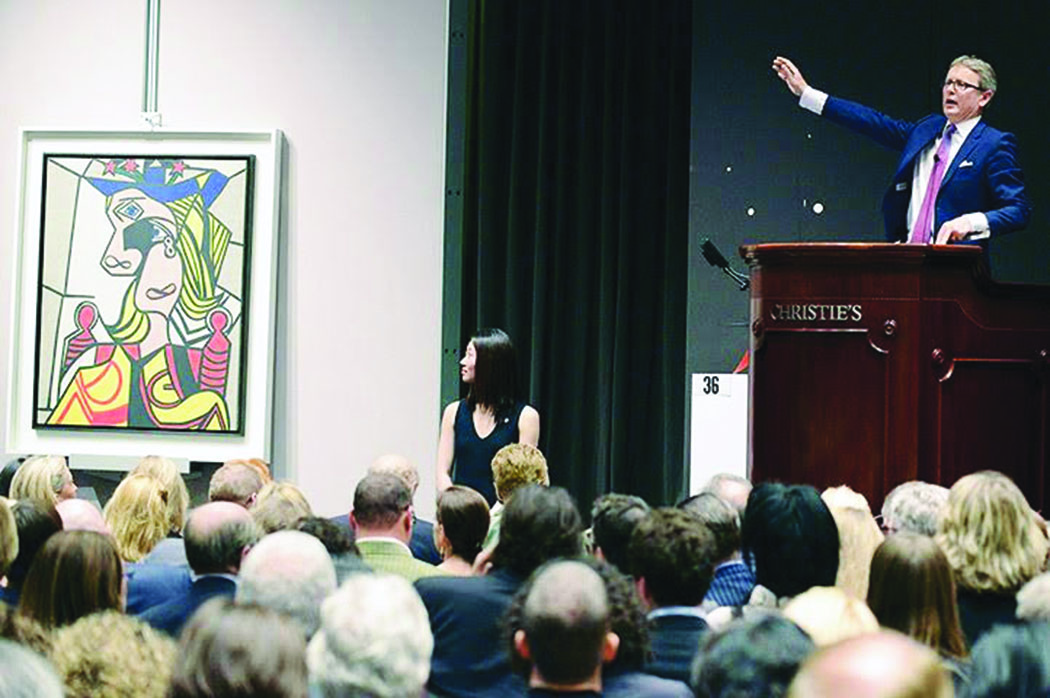
The truth, at least from where I stand, is simpler and a bit awkward. Once art becomes a market, this kind of behaviour is almost inevitable. At its simplest, flipping is buying art because you think it will go up in value, not because you want to live with it. When you buy a painting, after all, you own it. You can sell it whenever and to whomever you like. This is the same principle that applies to houses, cars, or shares. What sets art flipping apart is the speed and the very public drama that often follows. A collector might buy a work at a gallery opening and, within months, resell it — sometimes at an international auction — for two, five, or even ten times what he paid. Sometimes, the art market feels less like a cultural space and more like a trading floor.
The case against flippers feels deeply personal to many of us who care about artists. For a young creator, especially one just finding her footing, rapid price inflation may look like good news, but it can be disruptive.
Traditional galleries, not just art shops, try to nurture talent gradually by pricing work accessibly, placing it with collectors who truly engage with it, securing museum loans, and building a reputation, patiently, over years. Flippers often short-circuit that careful process. One strong auction result can swiftly reset expectations. Suddenly, everyone — collectors, institutions, even the artist’s own gallery — is measuring new work against that inflated benchmark. When the hype inevitably cools, the artist is left carrying a burden her developing practice may not yet sustain.
The pressure is also subtler than it first appears. An artist in his late twenties or thirties might hear quiet suggestions: “Don’t change your style too much,” “Keep producing what the market wants,” or “Stay recognisable.” The slower parts of becoming an artist — trying things out, getting it wrong, rethinking, changing direction — feel risky once the market has fixed an idea of what that “promising new artist” should be making.
The conversation shifts too, away from the work itself and towards what will sell.
Then there is the financial reality that can feel profoundly unfair. Artists sell the work once, at the original price. Every subsequent resale, no matter how profitable, leaves them with nothing. The gains flow to collectors, advisers, and intermediaries. In Nigeria and across much of Africa, this plays out in its own distinct way. We currently lack active local auction houses, so classic domestic “wet paint” flipping is rare. Very few fresh works by Nigeria-based artists reach the big international auction houses directly. Instead, the dramatic multiplication often happens the moment a Nigerian artist breaks through with a significant exhibition abroad. A successful show in London, New York, or Paris can cause prices to surge almost overnight. International collectors who bought directly from the exhibition may quickly flip those pieces on the secondary market. For the artist watching from Nigeria, it creates a bittersweet paradox: international recognition brings validation and opportunity, yet the biggest financial rewards often flow outwards, away from the communities and ecosystems that supported their journey.
Galleries also feel this sting acutely. Serious gallerists pour years of care into building an artist’s career, only to see important works flipped abroad, weakening their ability to guide the work’s circulation and maintain stable pricing. Some galleries respond by quietly blacklisting known flippers, vetting buyers more rigorously, or choosing to sell to museums and long-term collectors even when speculators offer more money. These efforts show care, but they have clear limits in a borderless market.
And yet, I also understand the other side — the ways speculation can genuinely open doors. Some of the collectors later labelled as flippers were among the first to believe in an artist when almost no one else did. They provided crucial early support: the kind that helps pay for a better studio, assistants, travel to exhibitions, or ambitious new projects. For artists who have struggled for years, that financial injection can feel life-changing. It offers a rare sense of stability and independence.
Beyond money, a dramatic secondary market success acts as a powerful megaphone. When a Nigerian artist suddenly starts selling for much higher prices abroad, the art world takes notice. Collectors and museums who might have overlooked them start calling. That kind of attention can open real doors, even if the artist doesn’t see much of the resale money. Some artists have turned that burst of visibility into sustained careers, institutional placements, and broader recognition, even if they didn’t share directly in the flipping profits. But markets are not simply corrupting forces. Prices send signals, attract resources, and can help sustain more artists over the long term.
There are signs, in recent years, that the frenzy is cooling. Serious collectors have grown warier of short-term bets, and the conversation in the market has shifted noticeably towards longer commitments, more considered acquisitions, and greater attention to an artist’s practice as a whole rather than a single bankable moment. Still, the tensions remain real. Artistic careers develop slowly, through patience and persistence. Market momentum, especially once an artist steps onto the international stage, can accelerate dramatically. For Nigerian artists, that contrast can feel especially sharp. One strong exhibition abroad can transform everything almost instantly — bringing both thrilling possibility and intense new pressures.
The art world itself often feeds the very dynamics it criticises. Scarcity creates buzz. Waiting lists build desire. Record prices generate headlines that benefit galleries, artists, and the broader ecosystem. Many who complain about flippers still participate, however reluctantly, in a system that rewards speed and spectacle. The slower, quieter rewards of art — living with a work, looking deeply, letting understanding mature over time — can feel harder to protect in today’s fast-moving environment.
Speculation isn’t going anywhere — and it probably never has. People have been profiting from other people’s taste and foresight for as long as art has had a price. What has changed — and what we can change — is how much protection artists have when it happens.
Some practical steps are already underway. Galleries continue careful buyer screening and informal blacklists, though their power is limited across borders. A bigger, more structural solution lies in the droit de suite — the artist’s resale right — which gives creators a percentage of proceeds from later sales above a certain threshold. This is law across the EU and UK. Nigeria and most African countries do not yet have equivalent protections. Introducing resale royalties here wouldn’t stop flipping or sudden price jumps abroad, but it would ensure Nigerian artists receive a share of the value their work generates on the international market.
Technology also brings hope. Blockchain systems and smart contracts can automatically direct a portion of every resale back to the artist and gallery, baking fairness into the transaction itself. These experiments are still developing, but they point towards a more equitable future.
In the end, the debate around art flippers is really a debate about what we think art is for. The same market that celebrates artistic freedom can quietly push towards repetition and safety. Collectors who speak movingly about culture may still treat works primarily as assets. The danger isn’t money — money has shaped art for centuries — but the risk that financial logic begins to crowd out everything else: meaning, beauty, experimentation, and cultural resonance.
Flippers didn’t create these contradictions; they simply make them more visible. At the core, there is an artist in a studio somewhere, doing the actual work that gives all of this its value. It feels only fair that they should share more meaningfully in its ongoing success. At the same time, a vibrant market that rewards early believers and amplifies hidden voices remains vital — especially for artists emerging from places like Nigeria.
I keep coming back to something quite simple. When a young Nigerian artist’s work doubles in price in a London auction room, look at who is there — and who isn’t.
• Jess Castellote, PhD, is the Director, Yemisi Shyllon Museum of Art, Pan-Atlantic University
[ad_2]
Source link













Leave a comment