


[ad_1]
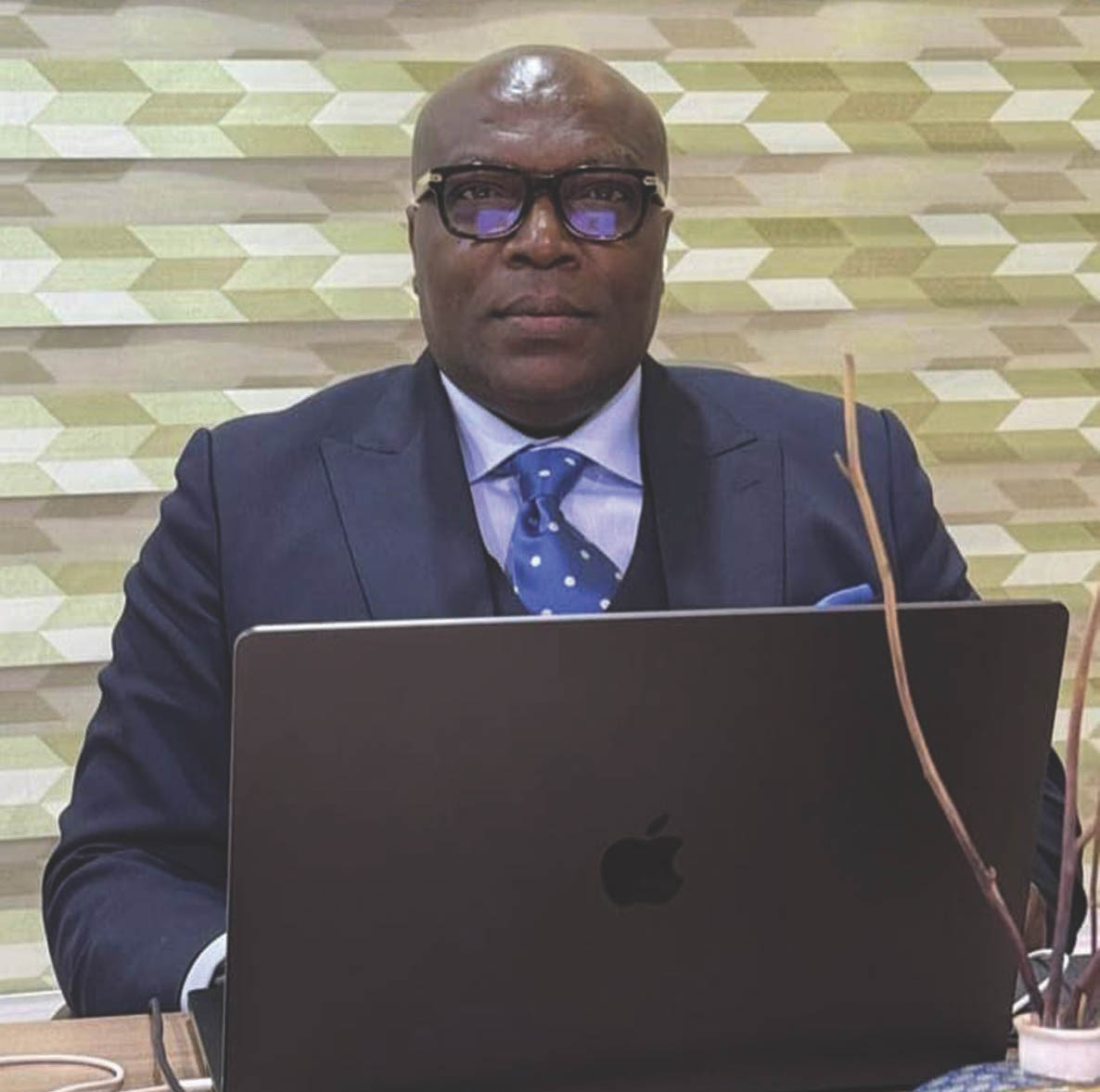
Dr. Jay Osi Samuels, a Harvard-trained public health expert, is the Deputy Chief Executive Officer (Programmes) of APIN Public Health Initiatives, which was set up in 2001 to battle the scourge of HIV/AIDS in Nigeria. As the organisation is set to mark its 25th anniversary, Samuels tells the story of how the organisation moved from being an intervention body to a major player in public health management in Nigeria. Oluchi Chibuzor brings the excerpts:
Can you tell us how APIN Public Health Initiatives came to be 25 years ago?
APIN started as a project of the Harvard School of Public Health in 2001, which was also how APIN derived its name, AIDS Prevention Initiatives in Nigeria, with $25 million funding from the Bill and Melinda Gates Foundation. The project focused on conducting molecular epidemiology of the virus and implementing community prevention efforts in Nigeria, with a specific focus on three states: Lagos, Plateau, and Oyo. The reason for that was that, from 2000 to 2001, Nigeria was just emerging from a military dictatorship, and before that, Nigeria was more or less a pariah in the international development community. Because of our population, there was a concern of Nigeria’s HIV prevalence hitting and surpassing the five percent threshold, with its resultant devastating effects, which have already been documented in countries like South Africa and Kenya. It was with this in mind that Prof. Phyllis Kanki, who was the lead investigator for the Harvard School of Public Health and who, through her work in Senegal, described the HIV 2 virus, wrote a proposal to the Bill and Melinda Gates Foundation on the need to stem the tide of HIV/AIDS in Nigeria and prevent the implosion. In Oyo and Plateau States, the work was more scientific and laboratory-based and was about studying the molecular epidemiology of HIV/AIDS in Nigeria, characterizing and understanding the different strains of the virus. In Lagos, the efforts were more about prevention, and we were working with the New Era Foundation, which was set up by the then First Lady of Lagos State, Senator Oluremi Tinubu, who is now the First Lady of Nigeria. Her Foundation was an umbrella body working with about 30 other community-based organisations. So through funding from APIN, she was able to work with these other organisations. In 2004, the US government announced its initiative, which was the US President’s Emergency Program for AIDS Relief, PEPFAR. It was a different program as the then US President, George Bush, was concerned with the HIV/AIDS prevalence in Africa and its impact on the continent. So, he set up PEPFAR as an intervention to address it, and, of course, because of Nigeria’s strategic position in Africa, he specifically asked that Nigeria be the country of focus in Africa. They also had a criterion that any investigator must have at least three years of experience in their country of interest. Prof. Kanki was specifically invited to bid for the program. She won the grant to work in Nigeria, Tanzania, and Botswana. And this marked the beginning of the APIN treatment program in Nigeria, per se. That was how APIN evolved from a preventive project to a more service delivery intervention body in terms of HIV/AIDS in Nigeria.
Is the US President’s intervention still supporting APIN till today?
Yes. They are still supporting us. We have completed four 5-year funding cycles since then.
So, how has the journey been? In terms of success rate, effectiveness and meeting your targets as well as deliverability on core mandate.
I will answer from two angles. First, as an organisation and two on the general impact on the country. First, on the PEPFAR, that is the US President intervention funding, Nigeria currently has over 1.7 million people on treatment. We are moving towards achieving the 95-95-95 goal. What this means is this: the first is about the percentage of people who know their status. And we have achieved that. The second 95 is the percentage of people who, through data, have been infected with HIV and are on treatment. Currently, Nigeria is close to that 95 percent. The third 95 is the percentage of people who are on treatment, receiving drugs, and virus-suppressed. On these scores, Nigeria is doing very well.
On the human development indices, people like us are here today because of the US President’s intervention funding. There are thousands of people employed, and you can imagine the direct and indirect impact on human capital development. Currently, APIN has a workforce of close to 4000. These include over 400 direct hires and over 3000 indirect hires. You can imagine the multiplying effect of that on the population of Nigeria and the family economy. Yet, APIN is just one of the several organisations implementing the US government intervention efforts in Nigeria. About 25 organisations are working on that US project, even if APIN is one of the biggest. In terms of human capital development, training and employment, as well as HIV investment infrastructure in Nigeria, the effect has been massive. APIN is currently working in five states, and we are supporting 443 health facilities in the country. And out of those 443, we have over 200 of them whose laboratory capacity, in terms of capacity and human resources, is being supported by APIN. You can imagine the effect on income streams, healthcare delivery systems at the tertiary, secondary, and local government levels.
As for APIN as an organsation, with the work we are doing, APIN has evolved from being a project of Harvard School of Public Health to being an institution in Nigeria which is a locally registered, indigenous organisation. We are no longer a project but a Nigerian organisation. As a matter of fact, when the US government changed its policy about funding, nothing changed. For you to understand this, I have to provide the background. What happened was that the US government was funding US organisations like Harvard to come and work in Nigeria; these US organisations usually looked for local organisations to work with. Unlike some other US organisations that would bring Americans in and be running the project themselves, what Harvard did was to build on Nigerian human resources, train them and support them in order to deliver the best quality of service. In fact, what they did was that they didn’t want samples to be moved from Nigeria to Boston to be tested. They wanted the type of clinical facilities they have in the US in Nigeria so that Nigerians can be capacitated to be able to do the work here.
Now, for these organisations, this came at a cost. This is because these American organisations have what they call statutory charges for overhead. For every $1 million they get, 40 percent or even 60 percent goes to overhead. So if it is $100 they got from the US, they take about $60 or thereabout and use the remaining to do the work. At some point, the US government became dissatisfied with that because it wanted every dollar to be used on what it was meant for. So they started encouraging the policy of asking the US institutions to transition to local partners so that the overheads will be eliminated and more funds would be freed for the projects to be executed.
When that policy came, APIN was the first Nigerian organisation to be transitioned to as Harvard transferred to us in terms of full project management in Nigeria. Between 2010 and 2012, the financial responsibilities of Harvard were transferred to APIN. So from them, APIN became funded one hundred per cent directly from the US government.
Between 2006 and 2008, we registered with the Corporate Affairs Commission, CAC. We work with the CDC, which is the Centre for Disease Control. They are the ones that fund us on behalf of PEPFAR. So APIN has transformed from being a project to a Nigerian outfit. It must be noted that after some time, around 2014, we have developed capacities beyond HIV/AIDS. So we wanted to start approaching other funders outside HIV/AIDS. But we found out that we were kind of stigmatised with HIV/AIDS. Anywhere we go, people always say, ‘You guys are HIV people. That was why we decided to change our names. Though going by works we were doing, we had become known by that name, APIN. So we did not want to lose that name. Therefore, we changed to APIN Public Health Initiatives. Just to maintain the brand name. So, APIN, which was once an acronym, became the brand name. In the same vein, our Board used to have foreigners like professors from Harvard and so on. So we had to transition the Board to be only Nigerians. Since then, we have won several awards, grants, and so on. Currently, we manage the major grants of the US government, like the comprehensive grants, data management grants and also the laboratory grants. Now, we have, since 2021, we have been operating from our corporate headquarters in Abuja, which is 100 per cent owned by us. Three years ago, we set up a diagnostic centre in Utako, Abuja. And as part of the 25th anniversary celebrations, we will be commissioning a new building adjacent to the diagnostic centre. A part of the new building will house the new MRI and other future projects of the organisation.
How cooperative have governments been in achieving your objectives at different levels?
Without the support of government, there is no way we could have achieved any success. This is because government is our landlord. Despite the fact that we get funding from the US government, it sets the policies and the guidelines. we have to have government buy-in to make any progress. If you want to train, there is no way you can train without government’s approval since the hospitals are owned by the government. So either federal, state or local government, we have to work with the authorities. So the cooperation of government has been tremendous. Currently, we are working in Benue, Plateau, Oyo, Ogun, and Ondo States. Collectively, we are currently managing 328,000 out of 1.7 million carriers receiving treatment. On the day of the event marking our 25th anniversary, government at different levels will be fully represented.
What are Nigerians to expect from APIN in the future?
They should expect a more vibrant APIN; one that is more involved in the wider scope of public health. Not in HIV/AIDS alone, but in every aspect of development like education, nutrition, and community development projects to ensure Nigeria is a better country for you and I.
[ad_2]
Source link













Leave a comment