


[ad_1]
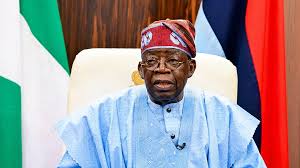
The Tinubu administration is laying a foundation for a more resilient economy, argues ADEWALE MUNIZ
When President Bola Ahmed Tinubu assumed office in May 2023, he inherited a nation weighed down by enormous economic contradictions. The Nigerian economy was burdened by unsustainable fuel subsidies, foreign exchange distortions, mounting debt obligations, declining investor confidence, and widespread structural inefficiencies that had accumulated over several decades. For many observers, the challenges appeared daunting, even overwhelming.
Yet, rather than postpone difficult decisions, Tinubu chose the path of bold reforms.
Nearly three years into his administration, the debate around those reforms continues to dominate national discourse. While critics focus on the temporary pains associated with economic adjustments, supporters argue that the country is gradually witnessing the early outcomes of a deliberate and courageous restructuring process aimed at rescuing Nigeria from long-term fiscal instability.
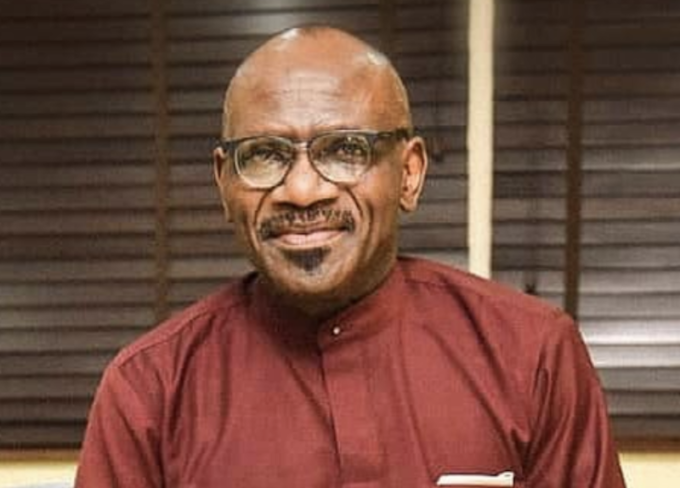
Among the strongest voices defending the administration’s reform programme is presidential spokesman Sunday Dare, who recently used a Northern Stakeholders Town Hall engagement in Kaduna State to present what many consider the most coherent defence yet of the Tinubu administration’s economic direction.
At the heart of Dare’s intervention was a simple but powerful message: reforms are never painless, but they are often necessary for national survival and future prosperity.
His remarks reflected a growing conviction within government circles that President Tinubu’s policies, though initially difficult, are beginning to reposition Nigeria on a more sustainable economic path.
Perhaps no policy better captures the administration’s appetite for difficult choices than the removal of fuel subsidy. For years, successive governments acknowledged that the subsidy regime had become a massive fiscal drain riddled with inefficiencies and corruption. Yet political fear repeatedly prevented decisive action.
On his inauguration day, he announced that “fuel subsidy is gone,” triggering one of the most consequential economic policy shifts in contemporary Nigerian history. The decision immediately freed up significant government revenues previously consumed by subsidy payments. While the policy initially generated economic shocks, especially in transportation and commodity prices, it also created fiscal space for increased allocations to states and investments in infrastructure and social programmes.
According to Sunday Dare, the impact of these reforms is already becoming visible across different sectors of the economy.
Speaking at the Kaduna town hall organised by supporters under the umbrella of the Tinubu Door-to-Door Movement, Dare described the president as “the reformer in chief,” emphasizing that no nation can transition toward sustainable growth without difficult structural adjustments.
His argument was not merely political rhetoric. It reflected the broader economic consensus that many of Nigeria’s longstanding challenges stemmed from years of postponing hard but necessary decisions.
The administration’s foreign exchange reforms provide another example. For years, Nigeria operated under a complicated multiple exchange rate system that distorted markets, encouraged arbitrage, and discouraged foreign investment. By moving toward exchange rate unification, the Tinubu administration signalled its intention to create a more transparent and market-responsive economic environment.
Though the transition created short-term volatility, many investors and international financial institutions interpreted the move as evidence that Nigeria was finally willing to undertake serious economic reforms.
Dare’s remarks in Kaduna highlighted this broader strategic thinking behind the reforms. According to him, President Tinubu entered office with not only vision but also clarity regarding the direction he intended to move the country.
That clarity, supporters argue, distinguishes Tinubu’s leadership style. Rather than govern cautiously to preserve short-term popularity, the president has opted for long-term structural corrections designed to stabilize public finances and reposition Nigeria for growth. In many respects, the administration appears willing to endure temporary political discomfort in exchange for future economic stability.
Importantly, the reforms are not being pursued in isolation from social interventions. Dare pointed to several targeted programmes aimed at cushioning the effects of economic adjustments on vulnerable Nigerians. Among these are direct support schemes benefiting millions of citizens, student loan initiatives for young people, healthcare interventions, and funding support programmes.
According to him, approximately 9.7 million vulnerable Nigerians are benefiting from financial support initiatives. Student loan schemes are also opening educational opportunities for many young Nigerians previously constrained by financial barriers.
These interventions form part of what Dare described as “micro-level impacts” of the administration’s policies.
This combination of structural reform and social support reflects an understanding that economic transformation must carry both macroeconomic and human dimensions. Fiscal discipline alone is insufficient if ordinary citizens cannot see evidence of inclusion and support.
Beyond economic reforms, the Tinubu administration has also intensified infrastructure development efforts nationwide.
Road construction projects, rail development, power sector reforms, and urban renewal initiatives are increasingly becoming central features of the administration’s governance narrative. Across various states, governors now point to increased federal allocations resulting from subsidy removal as enabling greater investments in roads, healthcare, agriculture, and education.
Kaduna State Governor Uba Sani, represented at the Kaduna town hall by Commissioner for Information Ahmed Maiyaki, highlighted how the removal of subsidy has strengthened subnational capacity for development and security interventions.
For years, many states struggled financially under a heavily centralised fiscal structure constrained by subsidy expenditures. Increased revenues to subnational governments are now creating opportunities for states to address local infrastructure deficits and social needs more effectively.
The Tinubu administration’s supporters see this as one of the major but less appreciated outcomes of the reform agenda.
Equally important is the administration’s emphasis on long-term economic foundations rather than short-term populism. Dare argued that “the fundamentals of the economy have been nailed down,” suggesting that the government is more focused on structural stabilization than temporary political applause.
This philosophy aligns with Tinubu’s longstanding political identity as a reform-minded strategist.
As former governor of Lagos State, Tinubu built a reputation for pursuing ambitious fiscal and institutional reforms that significantly expanded Lagos’ economic capacity. Many within his political camp believe he is now attempting a similar transformation at the national level.
The real debate, therefore, is less about whether reforms were necessary and more about how quickly the gains can translate into broader improvements in living standards.
What appears increasingly clear, however, is that the Tinubu administration is determined to stay the course.
Sunday Dare’s defence of the reforms in Kaduna reflects a government seeking to persuade Nigerians that the current hardships are part of a larger transition toward stability and growth. Whether through fiscal reforms, social interventions, infrastructure expansion, or investment-friendly policies, the administration insists it is laying foundations for a more resilient Nigerian economy.
The town hall itself also underscored another important dimension of Tinubu’s governance approach: engagement.
By encouraging dialogue between government officials, policy experts, grassroots stakeholders, and citizens, the administration appears eager to sustain public conversations around its policies. Organisers of the Kaduna event described the initiative as an effort to bridge the gap between government and the people.
That communication strategy may prove critical in the coming years.
Economic reforms succeed not only through policy execution but also through public understanding and trust. Citizens are more likely to endure temporary sacrifices when they believe there is a credible long-term vision behind them.
Ultimately, President Bola Tinubu’s administration is attempting one of the most ambitious economic restructuring programmes Nigeria has witnessed in decades. The journey remains difficult, and the outcomes are still unfolding. But as Sunday Dare argued in Kaduna, reforms are rarely comfortable. They are, however, often indispensable.
Muniz writes from Abuja
[ad_2]
Source link













Leave a comment