


[ad_1]
Jess Castellote
At a pottery workshop in Abuja, or in any of those found across Nigeria, potters shape clay on the wheel using gestures learned over generations. The technique lives on through gestures learned and repeated across generations. The object that emerges may be beautiful, demanding, even remarkable. Yet in the conventional hierarchy of the art world, it sits below a painting hanging nearby. One is called craft. The other, art. Frequently, I hear that the difference is fundamental, but I think it isn’t. This is more an inherited division than a natural one. The idea that creative work can be split into “pure” aesthetic expression and “functional” making arrived in Nigeria through contact with the West. Like in many other parts of the world, before that contact, there was no such boundary here. And when you look closely at the history of making in this region, the line begins to look less like a meaningful distinction and more like a cultural importation. Part of what makes this division so durable is a confusion between two things that are worth keeping separate: aesthetic value, which belongs to any object that rewards sensory and perceptual attention, and artistic value, which is specific to works made within the interpretive and institutional frameworks we call art. A hand-thrown pot can carry full aesthetic value—in its form, texture, and the evidence of its making—without being diminished by the fact that it is also useful. The hierarchy does not strip such objects of aesthetic seriousness; it misrepresents them by treating aesthetic value as lesser than artistic value, and then using that misrepresentation to enforce a ranking. That distinction, however, has taken root. It shapes university departments, museum collections, gallery pricing, and the quieter assumptions about whose work counts as serious. Fine art and applied art are frequently separated into different tracks, with different levels of prestige. What appears to be a neutral classification turns out to be an imported hierarchy.
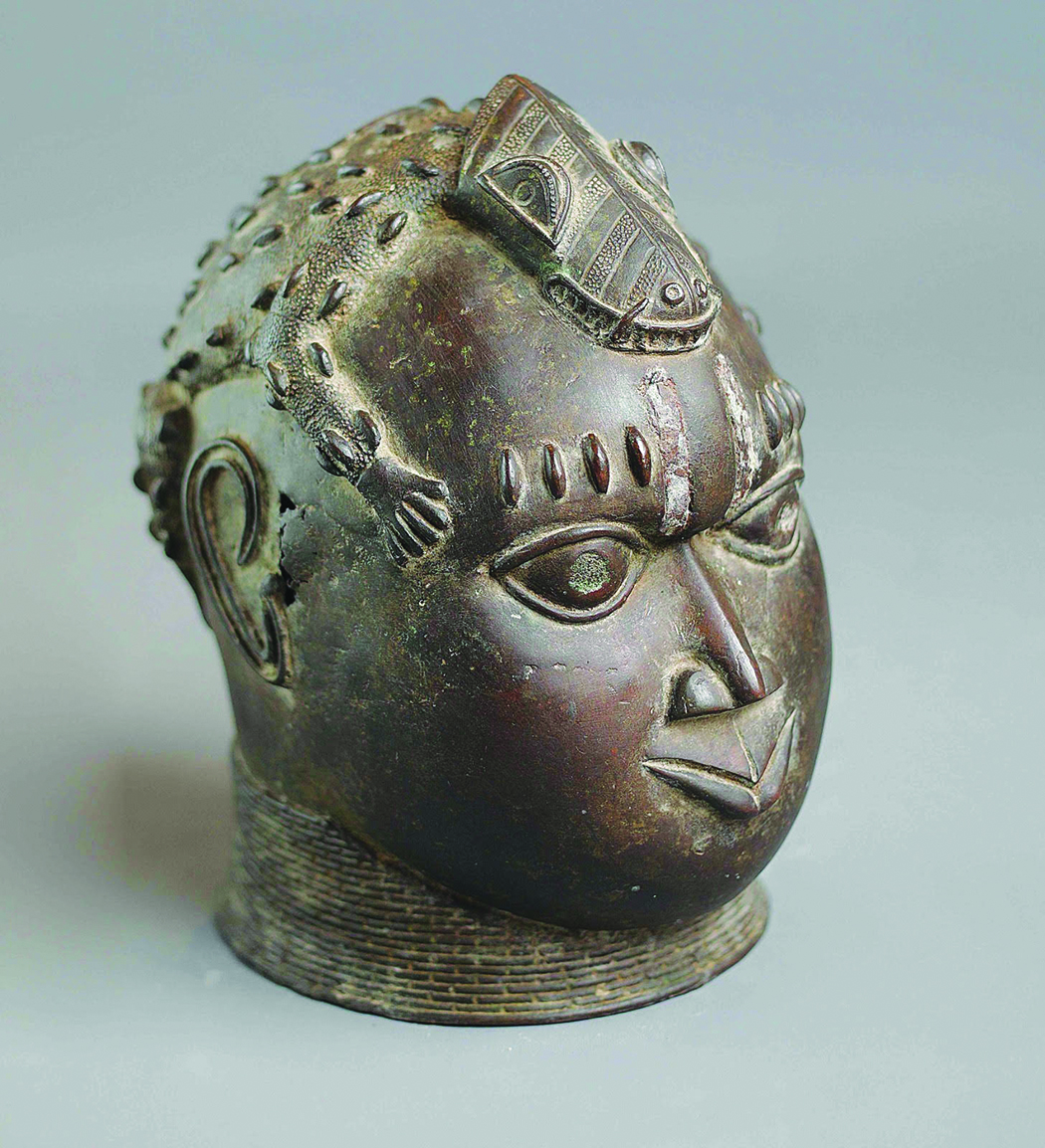
The bronzes of Benin City were cast by hereditary guilds—the igbesanmwan—within a system that combined technical mastery, ritual knowledge, and historical record. These works served royal courts, marked events, and carried layered meanings. Were they art or craft? The question doesn’t really apply. They were made within a framework that did not divide aesthetic value from function. In Benin, as in much of the pre-modern world, that opposition simply did not exist. And yet it would be wrong to conclude from this that these works lacked what we now call artistic value. They carried it fully: they demanded interpretation, encoded meaning, and shaped the experience of those who encountered them. What the later European hierarchy did was not invent a distinction that had been absent; it imposed a ranking onto a distinction that these traditions had simply never treated as a ranking. The bronzes were not lesser because they served a court. Their seriousness lay precisely in the full weight of purpose they carried. The same holds in Yoruba traditions. A Gelede mask, an Ifa tray, or a length of aso-oke—each is at once technical, symbolic, social, and aesthetic. The Yoruba concept of àrà—often translated as “art,” though, I am told, it means more than that—does not sort objects into higher and lower categories. A weaver was not doing something lesser than a sculptor, only something different. This is not unique to Nigeria. Chinese collectors prized ceramics as highly as painting. In Islamic traditions, intellectual and aesthetic rigor found expression in architecture, textiles, and metalwork. In Japan, the tea bowl or lacquer object could demand as much attention as any painting. These examples are not exceptions. They point to something simpler: the idea that functional objects cannot be art is historically narrow and culturally specific.
The distinction took shape in medieval Europe, where scholars separated the “liberal arts” from the “mechanical arts.” Over time, painting and sculpture were elevated, while activities tied to manual skill—pottery, weaving, metalwork—remained lower in status. By the 18th and 19th centuries, this hierarchy had hardened into institutional practice within academies, universities, and museums. There were challenges. Critics like John Ruskin and William Morris argued that separating design from making diminished both. They insisted that all forms of making deserved equal regard. They were persuasive, but the system—the academies, universities, and museums—largely remained intact.
What they could not have foreseen was how far this framework would travel. Through colonial education and cultural institutions, it spread across Africa and Asia, reshaping how societies understood their own traditions.
Three common arguments are used to justify the divide between art and craft. In my opinion, none holds up particularly well. The first concerns function: craft is useful, art is for contemplation. But historically, much of what we now call fine art served clear purposes—religious paintings for devotion, portraits for status, historical works to advance political narratives. The notion of “art for art’s sake” is relatively recent and more ideal than reality. At the same time, objects considered “craft” often operate far beyond utility. A Benin bronze carries political and spiritual meaning. A Japanese tea bowl shapes the experience of a ceremony. A Fabergé egg exists purely for display. The line between use and contemplation is not as clear as it sounds.
The second argument contrasts skill and concept: craft is about technique, art about ideas. This understates both sides. Benin bronze-casters were not simply executing forms; they were working within complex symbolic systems. A skilled adire maker in Abeokuta can embed layers of meaning into pattern and process. Conversely, painters in the Western tradition spent years mastering materials, anatomy, and perspective. Thought and technique are not separate domains. Serious work has always required both.
The third argument concerns materials. Oil paint, marble, and bronze became associated with “high” art, while clay, fibre, and wood were treated as lesser. But this hierarchy reflects economics and social history more than artistic potential. In Nigeria, this bias has an added effect: it devalues materials central to local traditions while privileging imported ones.
If the arguments are weak, why does the distinction endure? I think it is because institutions depend on it. Museums, auction houses, galleries, and departments in government cultural institutions have been built around these categories. They organise collections, pricing, and expertise accordingly. Once established, such structures tend to reproduce themselves. Nigerian institutions inherited this framework rather than developing it independently. Art schools, museums, and cultural bodies were shaped by colonial and post-colonial models that placed painting and sculpture at the top of a constructed art pyramid. The consequences are visible. Historical works from traditions like Benin bronze-casting receive global recognition, while contemporary practitioners within those same traditions often remain undervalued. The hierarchy does not just classify objects; it affects livelihoods. Even the same object can shift categories depending on context. A ceramic vessel may be sold as a functional pot or exhibited as sculpture. The object itself has not changed—only how it is framed.
There are signs of change. Conversations around textile traditions, bronze casting, beadwork, and other practices are becoming more serious and more visible. Curators and collectors are beginning to engage with these forms differently. But the underlying structures are still largely in place. Artificial intelligence enters this discussion in an unusual way. AI-generated images do not fit neatly into either category. They are not craft in any traditional sense—there is no direct physical engagement with material. But they also sit uneasily within the idea of fine art, since the act of making is partly delegated to a system. You provide direction; the machine executes. This alone exposes how limited the existing categories are. What AI makes newly visible is the difference between aesthetic value and artistic value. A generated image can be visually compelling—it can carry real aesthetic weight in its composition, colour, and surface. What remains genuinely uncertain is its artistic value: the questions of intention, authorship, and the kind of engagement that makes a work worth interpreting rather than merely looking at. These are precisely the questions the art/craft hierarchy has always obscured by treating them as already settled. AI unsettles them again, and in doing so it reopens the same argument that traditional craft practices have been making for centuries. Artists are already working across boundaries: generating images with AI and then painting them, training systems on their own work, or combining digital outputs with manual processes. These practices resist simple classification.
As AI makes image production faster and cheaper, the qualities associated with human making become more noticeable. Time, skill, and embodied knowledge begin to matter in new ways. A hand-thrown pot or a woven textile carries traces of process—decisions made in sequence, adjustments in real time, knowledge accumulated through repetition. These are not easily replicated by a prompt. What was once seen as inefficiency—slowness, irregularity—starts to read differently when compared with instant output. The value of human presence becomes more visible. Perhaps the most useful effect of AI is that it makes the old binary harder to maintain. The art/craft divide depends on oppositions: functional versus aesthetic, skill versus concept, high versus low. But most meaningful work does not sit cleanly on one side. It never really has. A more useful question might be: what kind of process produced this object, and what does that process involve? That question applies equally to a pot, a painting, an AI-generated image, or a bronze cast. It shifts attention away from labels and towards intention, skill, and engagement.
Back at the pottery workshop in Abuja, the person shaping clay is working within a tradition of ceramic making that predates the European academy by millennia and has nothing to apologise for in comparison with it. The demands on skill, judgment, and cultural memory are not lesser; they are different, and the difference is worth knowing. The hierarchy we have inherited tells us that some kinds of making matter more than others. The history of making in this part of the world—long, technically brilliant, and largely indifferent to that hierarchy—tells us something else entirely.
• Castellote, PhD, is the director of Yemisi Shyllon Museum of Art. Pan-Atlantic University
[ad_2]
Source link















Leave a comment